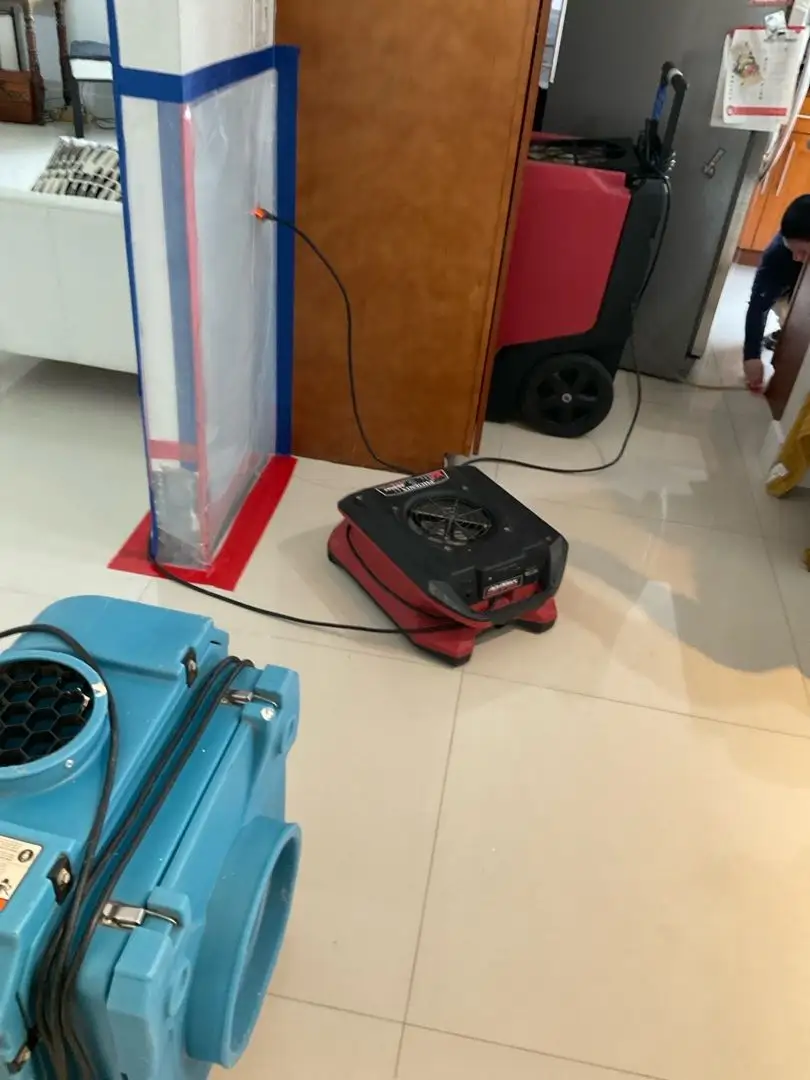
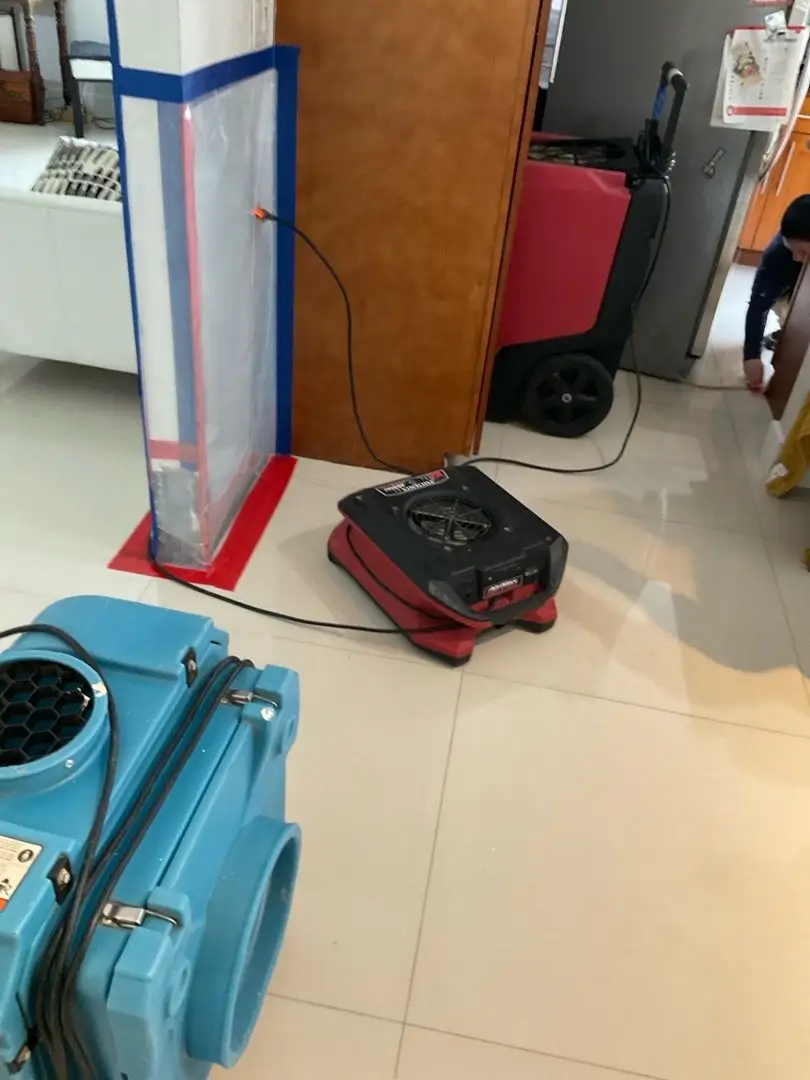
After any flood or significant water damage event, one of the most important pieces of recovery equipment is the dehumidifier. Many Newcastle homeowners assume that once the water is vacuumed up and the fans are running, the job is mostly done. It is not. The invisible moisture remaining in your carpet, subfloor, walls, and ceiling is what causes mould to grow and structural damage to develop. This guide explains exactly how a dehumidifier after a flood works, how long it needs to run, and what size you actually need.
When water enters your home, whether from a burst pipe, a storm, or a leaking roof, it does not stay as liquid. As the property attempts to dry, that water evaporates from saturated materials into the air as water vapour. This process is called off-gassing. Without a dehumidifier running to collect this airborne moisture, the room's relative humidity climbs to 80, 90, even 100 percent. At those humidity levels:
A dehumidifier solves this by continuously drawing moist air across cold refrigerant coils, condensing the water vapour into liquid, and expelling dry air back into the room. This creates the low-humidity environment that allows building materials to dry efficiently.
Important: Without professional dehumidification, mould can begin growing within 24 to 48 hours of a water damage event in Newcastle's warm, coastal climate. A standard household fan is not enough to prevent this.
The dehumidification process in structural drying follows a continuous four-stage cycle:
The dehumidifier draws room air, loaded with evaporated moisture from wet materials, across refrigerant-cooled coils.
The cold surface causes moisture in the air to condense into liquid water, which drains into a collection tank or is pumped directly to a drain.
Dry, warm air is expelled back into the room, creating the humidity gradient that draws more moisture out of wet building materials into the air.
The process runs continuously. Professional restoration units process 70 to 150 litres of water per day, many times the output of a household unit.
The right answer is not a number of days. The dehumidifier should run until moisture metre readings of all affected materials (carpet, subfloor, walls) return to target levels. Using time as the benchmark is unreliable. A room with a timber subfloor in a poorly ventilated space may need 7 days. A room with a concrete slab and good airflow may be clear in 3 days. The moisture metre tells you when to stop, not the calendar.
As a rough guide for planning purposes:
| Damage Scenario | Typical Dehumidifier Run Time |
|---|---|
| Minor appliance overflow, single room, concrete subfloor | 2 to 3 days |
| Burst pipe, 2 to 3 rooms, timber subfloor | 4 to 6 days |
| Roof leak into ceiling and walls | 5 to 7 days |
| Full flood event, whole property | 7 to 14 days |
These two pieces of equipment are designed to work together as a system, not independently. Running air movers without a dehumidifier pushes evaporated moisture into the air but does not remove it. The humidity rises, evaporation slows, and the drying stalls. Both are required for effective structural drying.
| Equipment | What It Does | Used For |
|---|---|---|
| Air Mover | Creates high-velocity airflow across wet surfaces, accelerating evaporation from materials into the air | Extracting moisture from carpet, subfloor, and wall surfaces into the room air |
| Dehumidifier | Collects moisture from room air by condensation, removing it from the space entirely | Removing the moisture that air movers pull from surfaces, completing the drying cycle |
Dehumidifier capacity is measured in litres of water removed per day (L/day). Here is how retail vs professional restoration units compare:
| Unit Type | Capacity | Suitable For |
|---|---|---|
| Household unit (hardware store) | 8 to 16 L/day | Ongoing humidity control in a dry home. Not for flood restoration. |
| Commercial hire unit | 25 to 50 L/day | Minor to moderate single-room water damage |
| Professional restoration unit | 70 to 150 L/day | Structural drying for flood events. What we use. |
For very minor water events, such as a small appliance overflow in a single room where you can confirm the subfloor is not affected, hiring a commercial dehumidifier and running it yourself is a reasonable option. Flood Services Newcastle offers professional drying equipment hire including commercial dehumidifiers and air movers.
If you are unsure whether the damage is minor or structural, call us for an assessment first. We will tell you honestly whether a hire unit is sufficient or whether a full water damage restoration response is required.
The dehumidifier should stop when moisture metre readings confirm all affected materials are at or below their target moisture content levels. Do not stop based on:
For insurance claims, a final clearance report with moisture readings is required before reconstruction can begin. Flood Services Newcastle provides this as standard.
Flood Services Newcastle offers dehumidifier hire and full professional restoration services. Industrial-grade equipment. Expert setup and monitoring. Call us for advice on what your situation needs.

 5 Stars With 100+ Returning Customers